
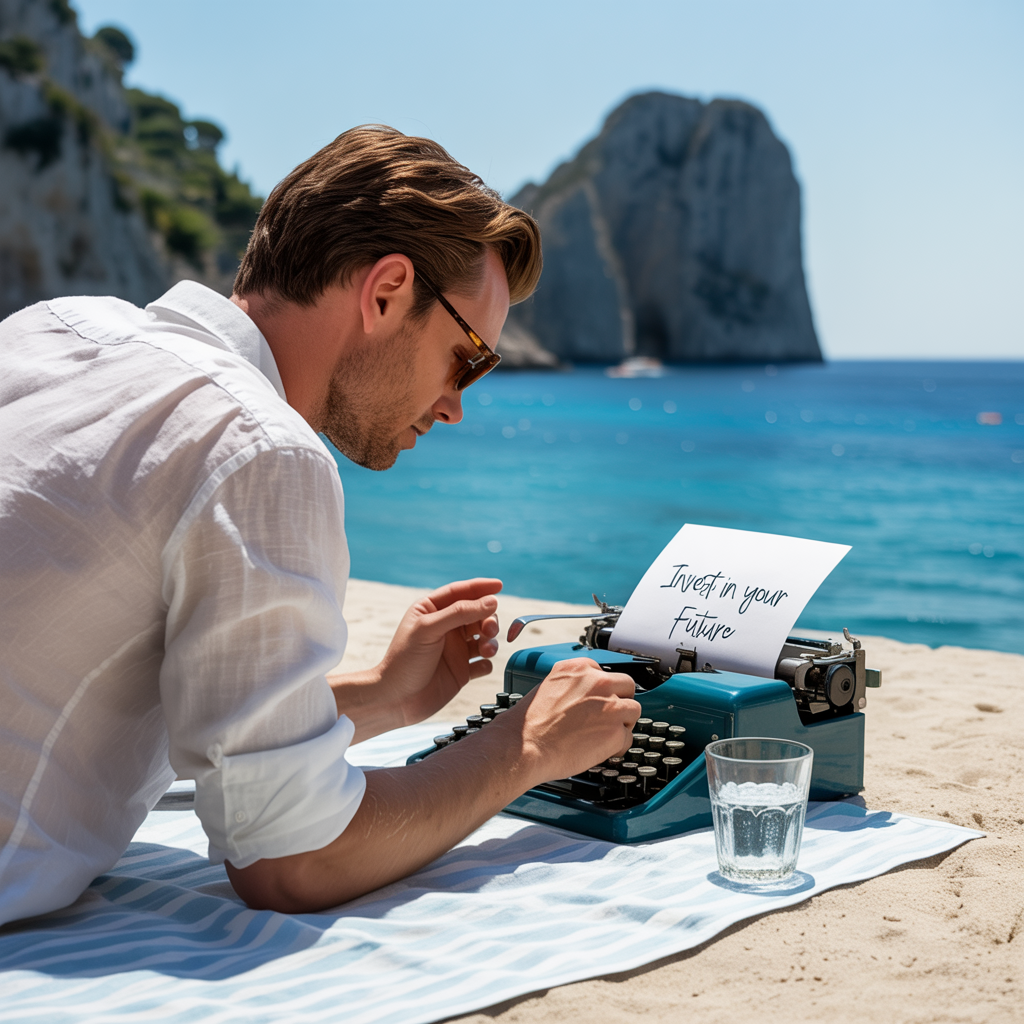
Writing Sales Copy in Capri, Italy: 5 Timeless Lessons From My Mediterranean Writing Retreat
Picture this: You’re staring at a blank document, cursor blinking mockingly at you, while another “urgent” sales page deadline looms. The pressure mounts as you struggle to find the right words that will actually convert readers into buyers. Sound familiar?
I completely understand that frustration. Every copywriter—whether you’re just starting out or you’ve been in the game for years—has felt that creative block where inspiration seems as elusive as finding a parking spot in downtown Manhattan. You know you have the skills, but sometimes the magic just isn’t flowing, and you need something to reignite that creative spark.
Here’s what I promise you: By the end of this article, you’ll discover five powerful copywriting lessons I learned during my transformative writing retreat in Capri, Italy—lessons that completely revolutionized how I approach sales copy and helped me break through my biggest creative barriers.
You’ll get a behind-the-scenes look at my 2012 Mediterranean adventure, learn specific techniques for infusing emotion and storytelling into your copy, understand how environment impacts creativity, and walk away with actionable strategies you can implement immediately to elevate your copywriting game—whether you’re writing from a Italian terrace or your home office.
The Capri Awakening: How a Mediterranean Island Changed My Copywriting Forever
Setting the Scene: My First Encounter with Paradise
The year was 2012, and I was at a crossroads in my copywriting career. After years of grinding out sales letters from cramped coffee shops and cluttered home offices, I felt creatively drained. The words that once flowed effortlessly had become mechanical, formulaic. I needed a change—not just of scenery, but of perspective.
That’s when I made what seemed like an impulsive decision: I booked a one-way ticket to Naples, Italy, with plans to take the ferry to the legendary island of Capri. What started as a desperate escape from creative burnout would become one of the most transformative experiences of my professional life.
As the ferry approached Capri’s dramatic coastline, I watched the sun paint the limestone cliffs in shades of gold and amber. The Mediterranean stretched endlessly before us, its surface shimmering like liquid sapphire. This wasn’t just beautiful—it was inspirational in a way that no motivational poster or productivity hack had ever been.
The Marina Grande Welcome
Stepping off the ferry at Marina Grande, I was immediately struck by the island’s intoxicating blend of luxury and authenticity. Colorful fishing boats bobbed alongside gleaming yachts, while vendors hawked fresh lemons the size of grapefruits—Capri’s famous sfusato lemons that would later inspire some of my most vivid sales copy metaphors.
I had come to Capri with a specific mission: to write sales letters for my coaching and consulting clients while immersing myself in an environment that demanded I see the world differently. I had no idea that this combination of focused work and sensory richness would unlock copywriting insights that would serve me for years to come.
My Daily Ritual: Where Aperol Spritz Met Conversion Copy
Each morning, I established a routine that would become sacred during my stay. I’d wake before sunrise, grab my laptop and notepad, and head to a small café overlooking the Faraglioni rocks—those iconic limestone formations that have become Capri’s signature postcard image.
With an Aperol Spritz in hand (yes, even at 9 AM—when in Italy, right?), I’d begin crafting sales letters for my clients. There was something magical about sipping that bittersweet Italian aperitif while writing persuasive copy. The contrast between the leisurely Mediterranean pace and the urgent demands of conversion-focused writing created a unique creative tension.
The Aperol Spritz became more than just a drink; it became a symbol of balance. The bitter orange and sweet prosecco mirrored the delicate balance every copywriter must strike between being direct about benefits while maintaining the reader’s trust and goodwill.
The Trek to Villa Jovis: A Metaphor for Copywriting Mastery
One particular afternoon stands out in vivid detail. I decided to tackle the challenging hike to Villa Jovis, the ruins of Emperor Tiberius’s grand villa perched on the island’s eastern cliff. The trek is not for the faint of heart—a steep, winding path that demands both physical endurance and mental determination.
As I climbed higher, leaving behind the bustling piazzetta and tourist crowds, I found myself completely alone with my thoughts and the stunning Mediterranean landscape. Each step required intention and effort, much like crafting persuasive copy that truly connects with readers.
When I finally reached the villa’s ruins, breathless but exhilarated, I was rewarded with a panoramic view that seemed to stretch to infinity. The mainland coast of Italy looked like a watercolor painting in the distance, while below, the sea crashed against ancient rocks that had witnessed centuries of human ambition and creativity.
It was in that moment, sitting among 2,000-year-old stones while the Mediterranean breeze cooled my sweat-soaked shirt, that I had a profound realization about copywriting that would change everything.
Five Timeless Copywriting Lessons From My Capri Experience
Lesson 1: Environment Shapes Creativity—Design Your Writing Space Intentionally
The most immediate lesson from my Capri adventure was the undeniable impact of environment on creative output. Surrounded by natural beauty and removed from the distractions of daily life, my writing became more vivid, more emotional, and significantly more effective.
You don’t need to jet off to an Italian island to apply this principle. The key is being intentional about your writing environment. Consider these specific strategies:
Create visual inspiration in your workspace. Whether it’s a window with a view, carefully chosen artwork, or even a screensaver of an inspiring location, visual stimuli can dramatically impact your creative mindset. During my Capri trip, the constant presence of natural beauty kept my imagination engaged and active.
Eliminate environmental stressors. Cluttered spaces create cluttered thinking. Before I traveled to Capri, my home office was chaos—papers everywhere, multiple monitors displaying distracting notifications, and general disorganization. The minimalism of my Mediterranean writing setup showed me how much mental energy was being wasted on environmental chaos.
Incorporate sensory elements that enhance focus. The sound of waves, the scent of lemon trees, the feel of the Mediterranean breeze—these weren’t just pleasant distractions; they were focus enhancers. You can recreate this at home with natural sounds, essential oils, or even tactile objects that ground you in the present moment.
Change your location regularly. One of the reasons Capri was so creatively energizing was its novelty. When you write in the same location every day, your brain goes into autopilot. Even small location changes—different rooms in your house, various coffee shops, or outdoor spaces—can reignite creative thinking.
The neuroscience behind this is clear: novel environments stimulate the brain’s production of dopamine, which enhances both motivation and creative problem-solving. Your sales copy will reflect this enhanced mental state.
Lesson 2: Slow Down to Speed Up—The Power of Mediterranean Pacing
Italian culture taught me something that American hustle culture actively fights against: sometimes slowing down dramatically increases your effectiveness. On Capri, I wrote fewer words per day than I did back home, but those words converted at significantly higher rates.
Embrace the pause between thoughts. Instead of rushing from one sentence to the next, I learned to sit with ideas, letting them develop fully before committing them to the page. This practice, inspired by long Italian lunches and leisurely afternoon strolls, resulted in more thoughtful, more persuasive copy.
Allow time for emotional processing. Great sales copy isn’t just about logic and benefits—it’s about emotional resonance. When you’re constantly rushing, you don’t give yourself time to truly feel what your ideal customer is experiencing. The relaxed Capri atmosphere allowed me to deeply empathize with my clients’ target audiences.
Write in natural rhythm cycles. I discovered that my creativity peaked in two distinct periods: early morning while watching the sunrise over the Faraglioni, and late afternoon during the golden hour. Instead of forcing myself to write during low-energy periods, I scheduled administrative tasks for those times and reserved peak creativity windows for actual copywriting.
This approach challenges the “always be grinding” mentality that pervades much of the online business world. Sustainable creativity requires rhythm, rest, and renewal. Your conversion rates will thank you for respecting these natural cycles.
Lesson 3: Story and Setting Are Inseparable—Use Vivid Details to Create Connection
Writing sales copy while surrounded by Capri’s dramatic beauty taught me that the most persuasive copy doesn’t just tell—it transports. Every piece of effective sales copy creates a movie in the reader’s mind, and the more vivid the details, the more compelling the experience.
Master the art of sensory writing. Instead of writing “Our coaching program will help you succeed,” I learned to write copy that engages multiple senses: “Imagine the confidence you’ll feel walking into that boardroom, knowing you have the skills and strategies that separate industry leaders from wannabes. Picture the satisfied smile on your face as you review your monthly revenue reports, seeing numbers that once seemed impossible.”
Use unexpected details to maintain attention. The lemon-sized sfusato fruits, the contrast of ancient ruins against azure seas, the particular way afternoon light filtered through olive trees—these specific, unexpected details made my writing memorable. Generic copy uses generic details. Memorable copy finds the unique angles that stick in readers’ minds.
Connect product benefits to emotional experiences. Watching sunset from Villa Jovis wasn’t just visually stunning—it was emotionally transformative. Similarly, your product or service isn’t just functionally beneficial—it creates emotional experiences. The more clearly you can describe those emotional outcomes, the more persuasive your copy becomes.
Build anticipation through environmental progression. Just as my hike to Villa Jovis built anticipation with each upward step, effective sales copy builds desire through progressive revelation. Start with relatable pain points, gradually reveal the solution, and culminate with the transformational outcome.
Lesson 4: Authenticity Trumps Perfection—Embrace Your Unique Voice
Capri’s charm isn’t in its perfection—it’s in its authentic character. The weathered fishing boats, the uneven cobblestone streets, the family-run restaurants that have operated the same way for generations. This authenticity created more appeal than any polished resort could achieve.
Stop trying to sound like everyone else. Before my Capri trip, I was unconsciously mimicking other successful copywriters’ styles. Surrounded by Italian authenticity, I realized that my unique perspective and voice were actually my greatest assets. Your background, your quirks, your particular way of seeing the world—these aren’t weaknesses to overcome; they’re strengths to leverage.
Share your real experiences and insights. The most engaging parts of any sales letter are the personal stories and genuine insights. When I started incorporating real experiences from my travels, my professional challenges, and my actual client interactions, conversion rates improved dramatically. Readers connect with humans, not with perfectly polished personas.
Admit your limitations and mistakes. Italian culture embraces imperfection in a way that American business culture often doesn’t. Some of my most effective sales copy includes honest admissions about past mistakes or current limitations. This vulnerability builds trust faster than any list of credentials ever could.
Let personality shine through professional expertise. You can be both professional and personable. The Italian business owners I met on Capri were serious about their craft while remaining warm and engaging as people. Your copywriting should reflect this same balance—expert knowledge delivered with human warmth.
Lesson 5: Cultural Immersion Expands Your Persuasion Toolkit
Living temporarily in Italian culture expanded my understanding of human psychology and persuasion in ways that no marketing book ever could. Different cultures emphasize different values, use different communication styles, and respond to different triggers.
Study how different cultures approach persuasion. Italian sales culture emphasizes relationship-building and emotional connection over aggressive closing techniques. Incorporating this approach into my copy—focusing on building genuine rapport before making asks—improved results across all market segments.
Understand varying decision-making processes. I noticed that Italian business decisions often involved longer consideration periods but resulted in stronger long-term relationships. This insight helped me create copy that nurtures prospects through extended sales cycles rather than trying to force immediate decisions.
Adapt communication styles to audience preferences. Some audiences respond to direct, American-style urgency. Others prefer the more nuanced, relationship-focused approach I observed in Italy. Learning to recognize and adapt to these preferences makes you a more versatile copywriter.
Incorporate universal human experiences. Despite cultural differences, certain human experiences are universal: the desire for belonging, the fear of being left behind, the satisfaction of achievement, the comfort of security. Travel and cultural immersion help you recognize these universal elements while appreciating cultural nuances.
Applying These Lessons to Your Copywriting Practice
The magic of my Capri experience wasn’t just in the location—it was in the intentional combination of environmental inspiration, cultural immersion, and focused creative work. You can create similar transformational experiences without international travel by applying these principles systematically.
Start by evaluating your current writing environment and making one significant change this week. Then, experiment with slowing down your writing process, allowing more time for emotional connection and sensory detail. Most importantly, embrace your authentic voice and unique perspective—these aren’t obstacles to overcome but advantages to leverage.
Remember, great copywriting isn’t just about following formulas or copying successful examples. It’s about creating genuine connections between your clients and their ideal customers. Sometimes that requires stepping away from the familiar, embracing new perspectives, and allowing yourself to be inspired by the world around you.
The lessons I learned while sipping Aperol Spritz and writing sales letters in one of the world’s most beautiful locations continue to influence my copywriting years later. They’ve helped me create more engaging, more effective, and more authentically persuasive copy for clients across dozens of industries.
Your own transformational copywriting experience is waiting—you just need to be intentional about creating the conditions for it to emerge.
Ready to take your copywriting skills to the next level? Explore my comprehensive copywriting courses where you’ll learn advanced techniques for creating persuasive, conversion-focused copy that builds genuine connections with your audience.